Running a small business in the United States comes with opportunity—but also risk. From customer injuries to data breaches and property damage, unexpected events can disrupt operations or even shut a business down. That’s why choosing the right business insurance is not just a legal formality, but a smart financial decision that protects cash flow, reputation, and long-term growth.
This guide explains the best types of business insurance for small businesses, what they cover, and which providers are trusted across the U.S. market.




Why Business Insurance Is Critical for Small Businesses

Small businesses often operate with tight margins. One lawsuit, accident, or natural disaster can cause serious financial strain. Business insurance helps by:
-
Covering legal and medical expenses
-
Protecting physical assets like offices and equipment
-
Replacing lost income during interruptions
-
Building trust with clients, partners, and lenders
In many states, certain policies are also legally required.
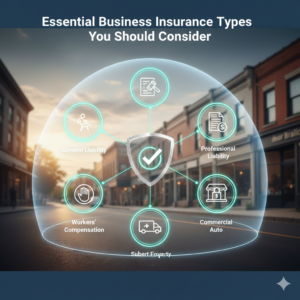
Essential Business Insurance Types You Should Consider
1. General Liability Insurance
This is the foundation of small business insurance. It protects against third-party claims involving bodily injury, property damage, and advertising disputes.
Best for: retail stores, contractors, service-based businesses
2. Business Owner’s Policy (BOP)
A BOP bundles general liability with commercial property insurance, often at a lower cost than purchasing them separately.
Best for: small offices, restaurants, storefronts, and growing businesses
3. Professional Liability Insurance
Also known as errors and omissions insurance, this policy covers claims related to mistakes, negligence, or professional advice.
Best for: consultants, designers, IT services, marketing agencies
4. Workers’ Compensation Insurance
Required in most states if you have employees, this policy covers medical expenses and lost wages due to work-related injuries.
Best for: any business with employees
5. Cyber Liability Insurance
As digital transactions increase, cyber insurance has become essential. It covers data breaches, ransomware attacks, and customer data loss.
Best for: e-commerce businesses, tech startups, service providers handling client data
Best Business Insurance Providers for Small Businesses in the USA

Hiscox
Hiscox is highly popular among freelancers and small service businesses due to flexible policies and competitive pricing.
Strengths: easy online setup, strong professional liability coverage
The Hartford
Known for reliability and tailored coverage, The Hartford is a go-to choice for traditional small businesses.
Strengths: strong BOP options, excellent claims reputation
NEXT Insurance
NEXT focuses on modern small businesses and startups with fast digital quotes and affordable plans.
Strengths: simple pricing, quick certificates of insurance
State Farm
With a nationwide agent network, State Farm is ideal for business owners who prefer in-person support.
Strengths: local agents, customizable coverage
Chubb
Chubb offers premium-level coverage with high policy limits and strong financial backing.
Strengths: comprehensive protection, excellent claims handling
How to Choose the Right Business Insurance

Before buying a policy, consider:
-
Your industry risks
-
Business size and revenue
-
State regulations
-
Client or contract insurance requirements
The best insurance plan is one that balances coverage depth, affordability, and claim reliability—not just the lowest price.
Final Thoughts
Business insurance is not an expense—it’s an investment in stability. For small businesses in the United States, having the right protection can mean the difference between a temporary setback and permanent closure. By choosing coverage that matches your real-world risks, you give your business room to grow with confidence.